A go-live plan for handing over hosting, environment, domain, payment, and admin access for installation work.

Read this like a handoff from someone who has to make the purchase work on a real site. It is written for buyers who want guided setup before launch, so Installation Service is not treated as a random script in a catalog. The point is to understand where it fits, what can quietly block the launch, and which checks should happen before time or budget is committed.
The tone is intentionally practical. A useful guide should not say "optimize everything" or "run ads" and then leave the reader alone. It should tell you what to inspect first, what evidence to collect, and which question belongs with support, setup, marketing, or the buyer. By the end, you should have a small decision note, not a pile of abstract advice.
Product Context
Installation Service is listed for the listed Ovion Market price on Ovion Market. The current catalog record describes it this way: A go-live plan for handing over hosting, environment, domain, payment, and admin access for installation work.
The target buyer is buyers who want guided setup before launch. For planning purposes, the catalog compatibility is Depends on selected product requirements and the listed version is current listed version. Before anyone customizes screens, writes ads, or promises a delivery date, confirm that the runtime, plugin, or hosting stack matches the environment that will actually be used.
Use the product detail page as the source of truth for current price, version, support window, included files, and checkout options. Then use this guide as the working brief. If you are buying for a client, turn each section below into an acceptance note: what was checked, who approved it, and which remaining question must be resolved by support or by your own team.
Buyer Decision Snapshot
| Area | What to verify | Why it matters |
|---|---|---|
| Product fit | Installation Service | Confirms the guide is tied to a concrete catalog item instead of a generic recommendation. |
| Platform | Laravel, WordPress, and WooCommerce | Keeps setup, content, and QA tasks aligned with the correct runtime or plugin stack. |
| Compatibility | Depends on selected product requirements | Prevents late launch blockers from PHP, database, theme, or provider mismatch. |
| Launch channel | Organic and buyer support | Defines whether the next step is SEO, service setup, checkout QA, or paused campaign review. |
What To Check First
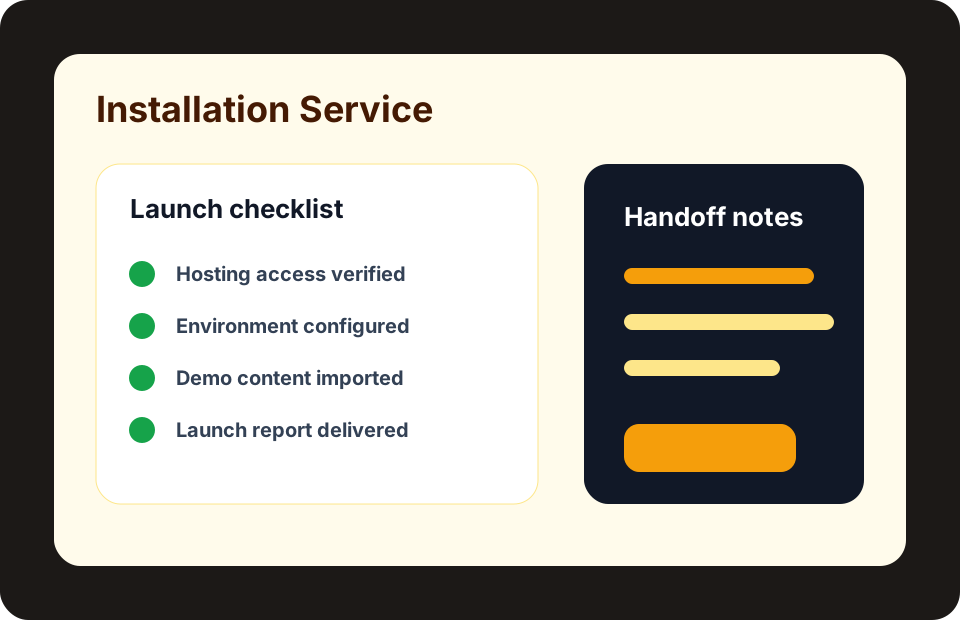
- Prepare hosting and database access
- Share temporary admin credentials securely
- Confirm domain and SSL state
- Collect payment provider keys
- Define acceptance checks before handoff
These checks should happen before heavy customization. If the product does not match the runtime, content model, checkout expectation, or support boundary, it is better to find that out while the decision is still flexible. When a check raises a question, write it down in plain language and link it to a product page, support request, or service page instead of leaving it as a private worry.
Setup Notes
Use the demo, docs, and included files to confirm the expected workflow before purchase. For Laravel, WordPress, and WooCommerce products, compare the listed requirements with the hosting account, PHP version, database version, theme/plugin stack, and payment provider settings that the project will actually use. If the item touches checkout, run a test order and verify email, coupon, tax, refund, and account states before pointing traffic at the page.
For implementation planning, split work into three passes. First, confirm the base install and the main happy path. Second, test the buyer-facing edge cases such as mobile layouts, form validation, empty states, coupon combinations, account access, and notification emails. Third, review the public launch layer: metadata, images, internal links, sitemap coverage, page speed, and tracking values.
The biggest mistake is treating setup as a single "install it" task. A marketplace product can install cleanly and still be unready for launch if no one checks the payment state, license behavior, service copy, support scope, or ad landing URL. When the project has deadline pressure, use the Installation Service or the most relevant service page to define the handoff before changes begin.
Included Signals From The Catalog
- Prepare hosting and database access
- Share temporary admin credentials securely
- Confirm domain and SSL state
- Collect payment provider keys
- Define acceptance checks before handoff
These signals are useful because they reduce guesswork. A feature list tells you what the product claims to include. Requirements tell you whether your environment can run it. Version and changelog notes tell you how recently the product was maintained. Support metadata tells you what kind of help should be requested through the buyer account instead of assumed during a custom build.
If you are comparing more than one item, put the catalog signals into a small decision table. Include product name, platform, compatibility, support window, setup effort, key risk, and preferred next step. That table makes the buying conversation much clearer than a list of screenshots or a vague "looks good" review.
Requirements To Confirm
- Prepare hosting and database access
- Share temporary admin credentials securely
- Confirm domain and SSL state
- Collect payment provider keys
- Define acceptance checks before handoff
Requirements deserve their own review because they create the boundary between a smooth launch and a support-heavy launch. For Laravel products, check PHP, database, queue, mail, filesystem, scheduler, and payment credentials. For WordPress and WooCommerce products, check theme/plugin compatibility, PHP limits, permalink behavior, email delivery, and the exact checkout or booking flow you plan to use.
When the requirement is outside your control, document it. Examples include hosting access, client-owned domains, payment provider verification, DNS timing, or third-party plugin policies. Those are not product bugs, but they can block launch. A good service brief separates product setup tasks from external access tasks so the project does not stall.
Common Mistakes To Avoid
- Buying from screenshots without checking compatibility, support scope, and version history.
- Treating launch as complete before checkout, notification, mobile, and account states are tested.
- Sending paid traffic to a page that has no UTM plan, no clear CTA, or no matching product proof.
- Writing SEO copy that promises outcomes instead of explaining requirements, setup steps, and limitations.
- Opening support or setup work without hosting, credentials, domain, payment, and acceptance notes ready.
Avoiding these mistakes keeps the work grounded. The purpose of a buyer guide is not to make every product sound perfect. The purpose is to identify when the catalog item, page content, service support, and launch channel are aligned enough to proceed.
SEO And Campaign Angle
The safest SEO angle is to describe the product category, the buyer problem, and the implementation steps without promising results that are not in the catalog. For paid ads, send traffic to the product detail page or a specific guide URL with UTM source, medium, and campaign values. Keep the first campaign paused until tracking, budget caps, creative policy, and landing page speed are verified.
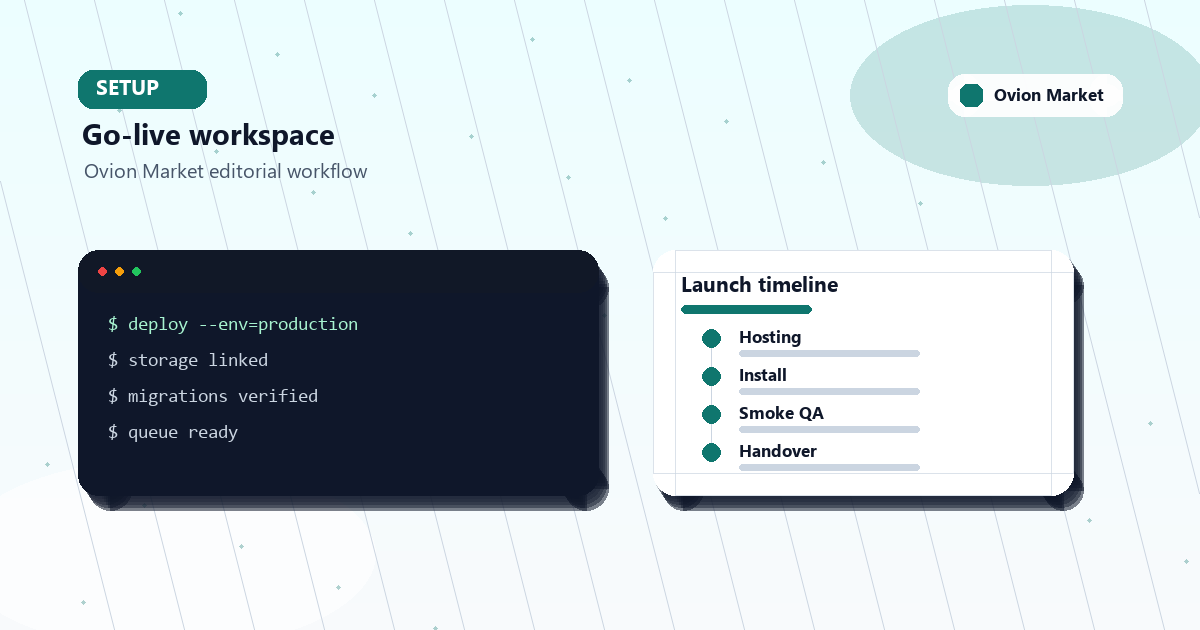
For organic search, make the page useful on its own. Use a descriptive title, a focused meta description, a single canonical URL, meaningful image alt text, and internal links to related products or services. For image SEO, the graphic should sit near relevant copy and have a filename and alt text that describe the subject. The local graphic for this guide is stored at /assets/img/blog/hero/installation-service-go-live-plan.png and should remain tied to this article topic.
For paid launch planning, keep the first campaign conservative. Use the product or service page as the landing URL, add UTM values, keep claims factual, and publish external objects in paused status when using the ads planner. That gives the team time to inspect policy status, budget caps, keyword match, creative text, and tracking before anyone activates spend.
Recommended Next Path
Start with the related product if the product fit is the main question. Use the service catalog if setup, customization, SEO, checkout, or paused ads readiness is the bigger risk. For platform-wide comparison, open the platform resource page and compare the matching products, services, and guides together.
If this article is part of a client handoff, summarize the decision in four lines: selected product, required service, unresolved risk, and launch owner. That record is enough to keep future support tickets and campaign reviews tied to the original buying decision.
FAQ
Is Installation Service enough for a complete launch?
It can be enough when the catalog requirements, hosting stack, content, checkout or form flow, and support expectations match your project. Use the checklist in this guide before assuming the product alone covers every launch task.
When should this move from product purchase to service scope?
Use a service scope when setup access, custom changes, checkout QA, SEO readiness, or paused ads planning needs an accountable handoff rather than a simple product download.
Does this guide make performance or revenue promises?
No. It uses Laravel, WordPress, and WooCommerce product metadata and official source notes to keep the advice factual. SEO and ads guidance is framed as readiness work, not a guarantee of rankings, approvals, or revenue.
Source Notes
- Laravel documentation: https://laravel.com/docs
- WordPress developer resources: https://developer.wordpress.org/
- WooCommerce documentation: https://woocommerce.com/documentation/woocommerce/